No products in the cart.
Why Refinery Recognition Matters in Physical Bullion

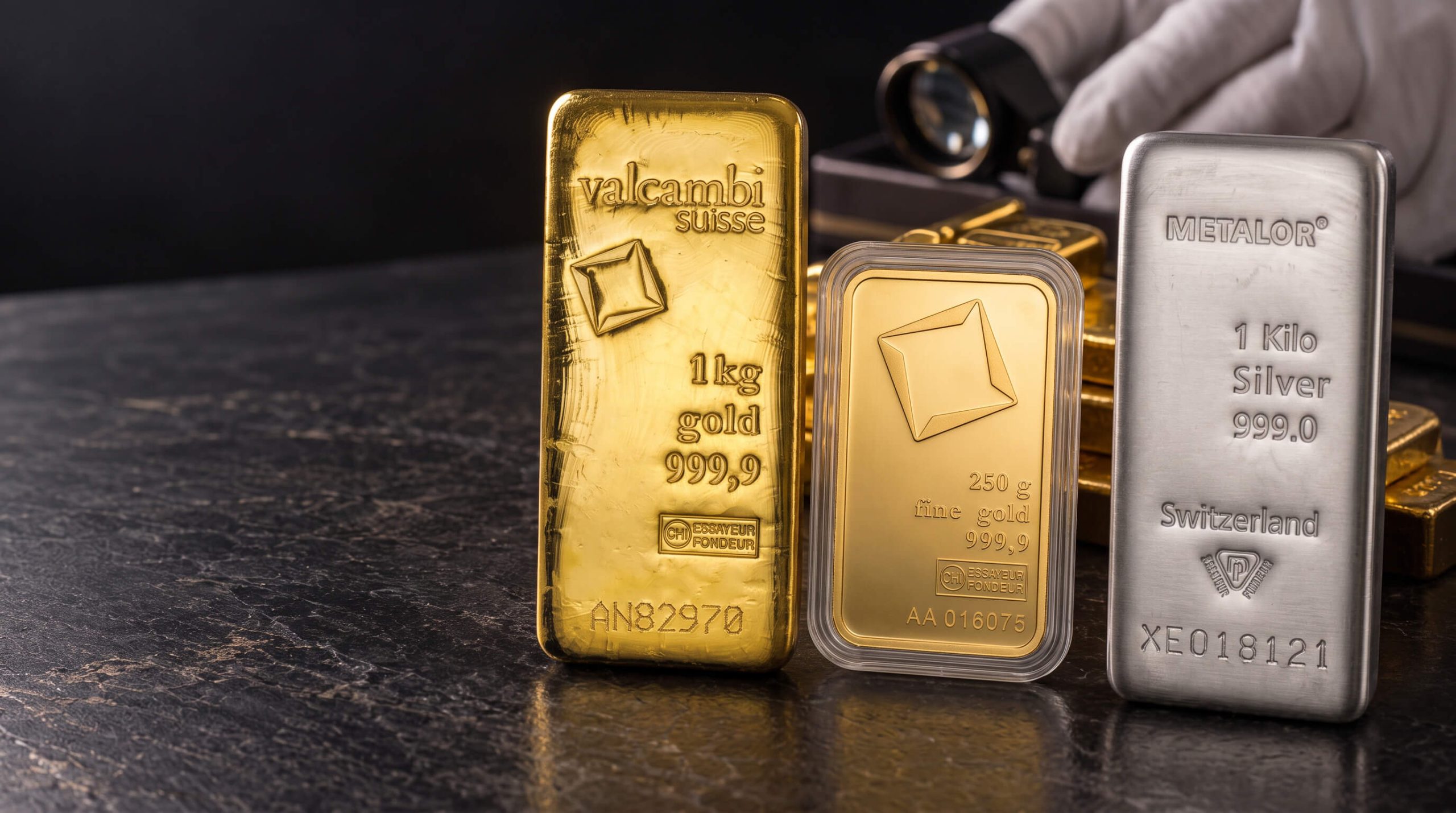
A gold bar is defined by more than its color.
A silver bar is defined by more than its weight.
Physical bullion combines several characteristics that allow a buyer to understand what the product actually is. Metal, weight and fineness are essential, but another detail also deserves attention: the refinery that produced the bar.
Refinery recognition matters because physical bullion eventually needs to be identified by people beyond the original buyer.
A recognized product can be easier to understand, compare and evaluate because its manufacturer, specifications and product format are familiar within the precious-metals market.
That does not mean a refinery name should replace proper evaluation.
It means manufacturer identity is one important part of a complete bullion product.
What Does a Precious-Metal Refinery Do?
A precious-metal refinery processes raw or previously used precious metal and produces material at controlled levels of purity.
For investment bullion, that refined metal can then be manufactured into products with defined specifications.
A bullion bar may communicate:
- Refinery
- Metal
- Weight
- Fineness
- Product markings
- Serial information where applicable
These characteristics allow the finished object to be understood as a standardized precious-metal product rather than simply an unidentified piece of metal.
Recognition Creates a Common Reference
Imagine receiving two gold objects of identical weight.
One clearly identifies a known refinery, weight and fineness.
The other has no recognizable manufacturer and limited information.
Even if both ultimately contain the same amount of fine gold, the first product gives a buyer, dealer or evaluator more immediately recognizable information.
Recognition creates a common reference point.
The person evaluating the bar can identify who manufactured it and what specification it is intended to meet.
RM Bullion Focuses on Swiss Refinery Products
RM Bullion states that it provides Swiss-certified precious metals sourced from internationally accredited Swiss refineries. Its current product range includes products from Valcambi and Metalor. RM Bullion
These names appear across multiple gold and silver weights.
For a buyer, this means refinery identity can remain consistent even when the physical format changes.
Valcambi Across Different Weights
A recognized refinery can produce several bullion denominations.
RM Bullion currently lists Valcambi gold products including 2.5 gram, 20 gram, 50 gram and 500 gram bars, each described at 999.9 fineness. RM Bullion
The weights are dramatically different.
The refinery identity remains recognizable.
This illustrates an important point: refinery and denomination are separate characteristics.
A buyer can choose a weight according to the buying plan while still selecting a recognized manufacturer.
Metalor Extends Recognition Across Metals
Refinery recognition can also extend beyond gold.
Metalor produces both gold and silver bullion products.
RM Bullion’s current range includes Metalor gold bars as well as the 250 Gram Metalor Swiss Silver Bar, which is listed at 999 fineness. RM Bullion
This gives buyers another form of continuity.
The metal and weight may change, but the refinery remains identifiable.
Recognition Does Not Mean Every Product Looks the Same
Products from one refinery can have different:
- Dimensions
- Packaging
- Markings
- Surface finishes
- Manufacturing formats
A small minted gold bar should not be expected to look exactly like a large silver bar.
The relevant question is whether the product matches the expected specification for its particular refinery, metal and denomination.
Refinery Identity Helps Product Comparison
Suppose a buyer is comparing two 50 gram gold bars.
If both have the same stated fineness but come from different recognized refiners, the buyer can then compare other characteristics more clearly.
These might include:
- Current price
- Availability
- Packaging
- Physical dimensions
- Personal preference
- Future flexibility
Knowing that both products come from recognized producers removes some uncertainty from the initial comparison.
Fineness Still Matters
A famous refinery name does not mean buyers should ignore purity.
The product specification still needs to be read.
For example, RM Bullion’s Valcambi gold bars are listed at 999.9 fineness, while its 250 Gram Metalor silver bar is listed at 999. RM Bullion
Refinery recognition complements the specification.
It does not replace it.
Weight Still Matters
The same principle applies to weight.
A 2.5 gram Valcambi gold bar and a 500 gram Valcambi gold bar share a refinery, but they represent completely different quantities of gold. RM Bullion
The refinery tells you who produced the bullion.
The weight tells you how much product the individual bar represents.
Both pieces of information are necessary.
Recognition Can Support Future Evaluation
Physical bullion may eventually leave the original owner’s possession.
It may be:
- Sold
- Gifted
- Inherited
- Transferred
- Evaluated for another reason
At that point, the next person needs to understand the product.
A recognized refinery gives them an immediate starting point.
They can identify the manufacturer and compare the bar with known product specifications.
Recognition and Liquidity Are Connected
Liquidity describes how easily an asset can be converted into cash or another accepted form of value without unnecessary difficulty.
For physical bullion, recognizable products can support this process because another market participant can more quickly understand what is being presented.
Refinery recognition does not guarantee a particular resale price or instant transaction.
Market conditions, authenticity, condition, weight, demand and dealer policies still matter.
But recognition can reduce ambiguity.
The Manufacturer Is Part of the Product Story
Bullion is sometimes discussed as though every gram of gold is interchangeable in every practical situation.
At the raw metal level, fine gold is fine gold.
At the product level, however, buyers hold specific physical objects.
Those objects have:
- Manufacturers
- Formats
- Markings
- Packaging
- Dimensions
- Market recognition
This is why two products containing equivalent amounts of fine metal can still have different retail characteristics.
Refinery Recognition Should Not Become Brand Collecting
A buyer can appreciate recognized manufacturers without turning bullion selection into ordinary brand consumption.
The purpose is not necessarily to own every refinery or chase visual variations.
For investment bullion, practical characteristics remain central.
Ask:
- Is the refinery recognized?
- Is the weight suitable?
- Is the fineness appropriate?
- Does the format fit my needs?
- Is the product sourced reliably?
- Does the current price make sense for my plan?
This keeps the decision focused.
Reliable Sourcing Remains Essential
A recognized refinery name printed on an object does not independently prove authenticity.
Names and markings can be copied.
This is why source matters.
Buying from an established bullion provider reduces the need to make authenticity judgments based only on visual inspection.
RM Bullion identifies itself as a subdivision of Ramez Mecattaf SAL and states that it offers certified physical gold and silver from internationally accredited Swiss refineries. RM Bullion
The seller, product and refinery all contribute to the buying context.
Packaging Can Support Identification
Smaller minted bars may arrive in protective presentation that keeps product information associated with the bar.
This can help owners maintain clear identification.
However, packaging should not be treated as the sole evidence of authenticity.
The refinery, bar specifications, markings and source still matter.
A professional-looking card cannot replace reliable sourcing.
Recognition Can Simplify Inventory
When a holding contains products from known refiners, organizing the collection becomes easier.
An inventory can group bars by:
- Refinery
- Metal
- Weight
- Quantity
This creates a straightforward structure.
For example, all Valcambi gold bars can be grouped together while Metalor silver products occupy another category.
Consistency Can Be Useful, but It Is Not Required
Some buyers may prefer to purchase repeatedly from the same refinery.
Others may hold products from several recognized producers.
Neither structure is automatically superior.
A consistent refinery can simplify organization.
Multiple recognized refiners can provide access to different weights and available inventory.
The decision can remain practical.
Availability Can Influence the Refinery Choice
Physical bullion depends on real inventory.
A buyer may prefer a particular refinery but find that another recognized option is currently available in the desired weight.
If the product specifications and buying objective are appropriate, choosing the available recognized refinery may be reasonable.
The broader plan should matter more than attachment to one logo.
Refinery History Can Build Market Familiarity
Established precious-metal refiners often have long operating histories.
That history contributes to familiarity among market participants.
It can also support the development of standardized product ranges that buyers recognize over time.
The practical value is not nostalgia.
It is continuity.
A product manufactured within a known system is easier to place within the broader bullion market.
Recognition Does Not Eliminate Verification
Even highly recognizable bullion should be evaluated properly when necessary.
Professional verification can consider characteristics beyond the printed refinery name.
These may include:
- Weight
- Dimensions
- Metal composition
- Physical properties
- Markings
- Packaging
- Product specification
Recognition makes identification easier.
Verification establishes confidence in the individual product.
Avoid Choosing Bullion by Appearance Alone
A highly polished bar may look more premium than a traditional cast product.
That does not automatically make it a better bullion choice.
Likewise, a visually simple refinery design can represent highly refined investment metal.
Bullion evaluation should remain specification-led.
The important information is measurable and identifiable.
Coins Use Mint Recognition Instead
The same general principle appears with investment coins, but the manufacturer may be a mint rather than a refinery.
A recognized sovereign, for example, carries identity through its minting tradition, design, weight and metal content.
Bars and coins therefore use different product languages while sharing the importance of recognizability.
Long-Term Ownership Benefits From Clarity
A bullion bar may remain stored for many years.
When it eventually reappears for sale, transfer or inheritance, clear identity becomes valuable.
The owner may remember exactly what was purchased.
Another person may not.
A recognizable refinery, defined weight and stated fineness give the product a clear starting point for evaluation.
Recognition Is One Part of a Complete Decision
Refinery recognition matters, but it should never become the only buying criterion.
A well-considered bullion purchase brings several factors together:
- Recognized manufacturer
- Appropriate weight
- Clear fineness
- Reliable source
- Suitable physical format
- Practical storage
- Current pricing
- Long-term objective
The refinery answers one question: who produced this bullion?
The strongest buying decisions answer all the others too.
Frequently Asked Questions
Why does a bullion refinery matter?
The refinery identifies who produced the bar and can make the product easier to recognize, compare and evaluate.
Does a recognized refinery guarantee authenticity?
No. Refinery identity is important, but reliable sourcing and proper product verification still matter.
Can the same refinery produce gold and silver bars?
Yes. Established precious-metal refiners can manufacture products across different metals and weights.
Should I always buy bullion from the same refinery?
Not necessarily. Buyers can choose among recognized refiners according to weight, availability, format, price and personal objectives.
Is refinery recognition more important than purity?
They answer different questions. Refinery identifies the manufacturer, while fineness describes precious-metal purity. Both should be considered.
Choose Bullion From Recognized Refiners
Explore physical gold and silver across trusted Swiss refinery products, practical weights, and clearly defined specifications.
Related Articles
Understanding Bullion Premiums Before You Buy
When buyers look at the price of a gold bar or silver bar, one of the...
Read More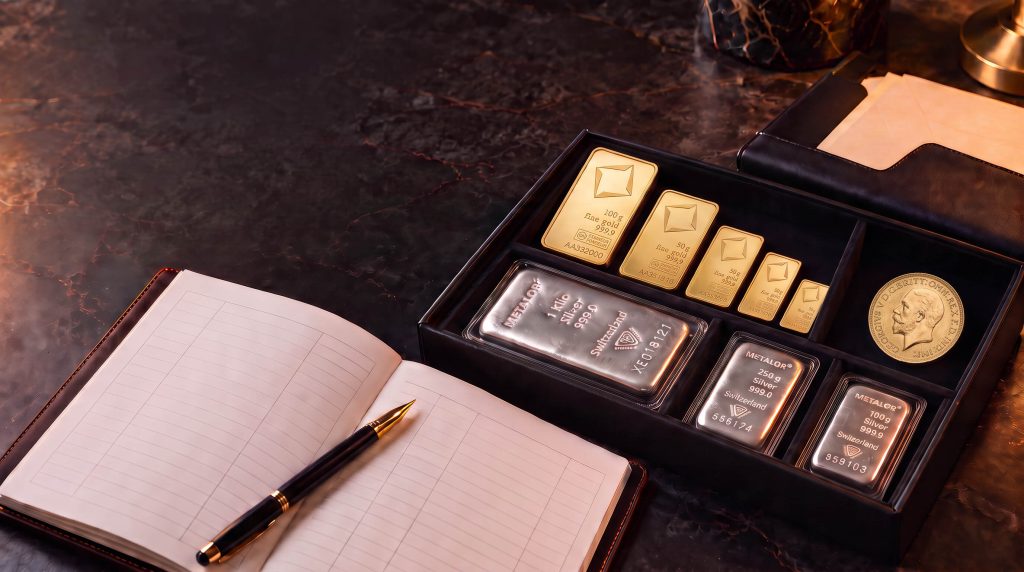
Building a Bullion Inventory You Can Actually Manage
Buying physical bullion creates something that a digital account does not: a collection of individual objects....
Read More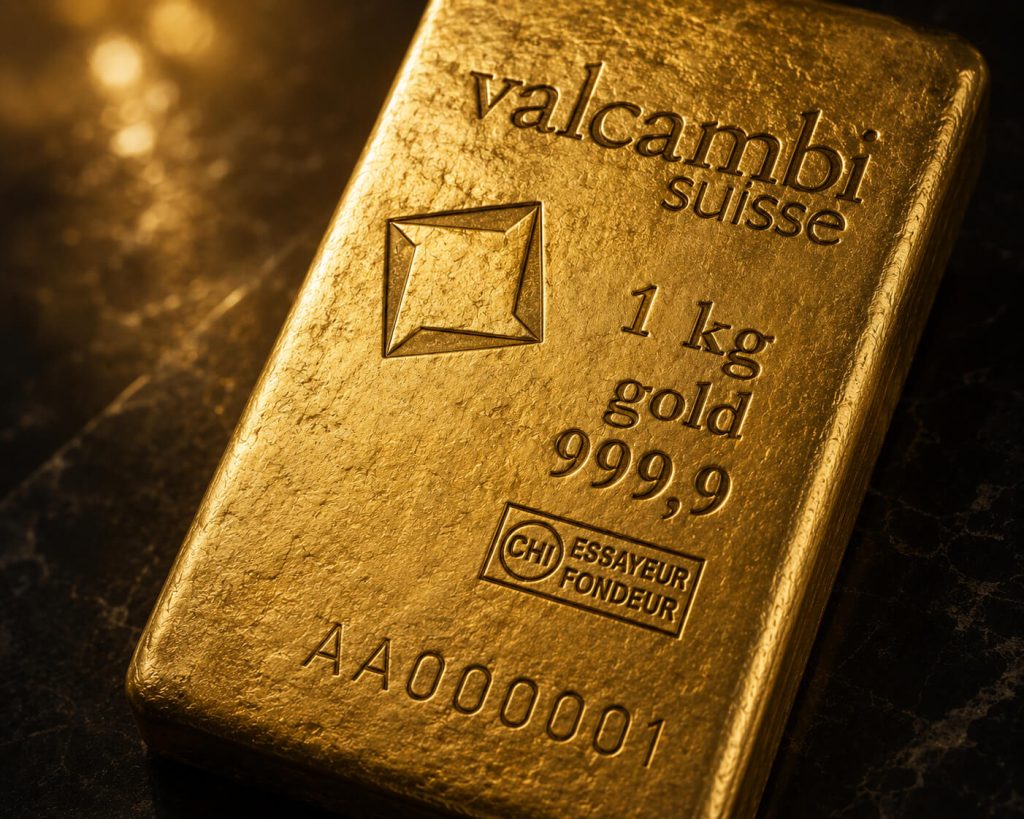
What 999.9 Purity Means When Buying Gold Bars
When buyers look at gold bars, one of the most important details they will notice is...
Read More