
No products in the cart.
What Changes When You Move From Gold to Silver Bullion?

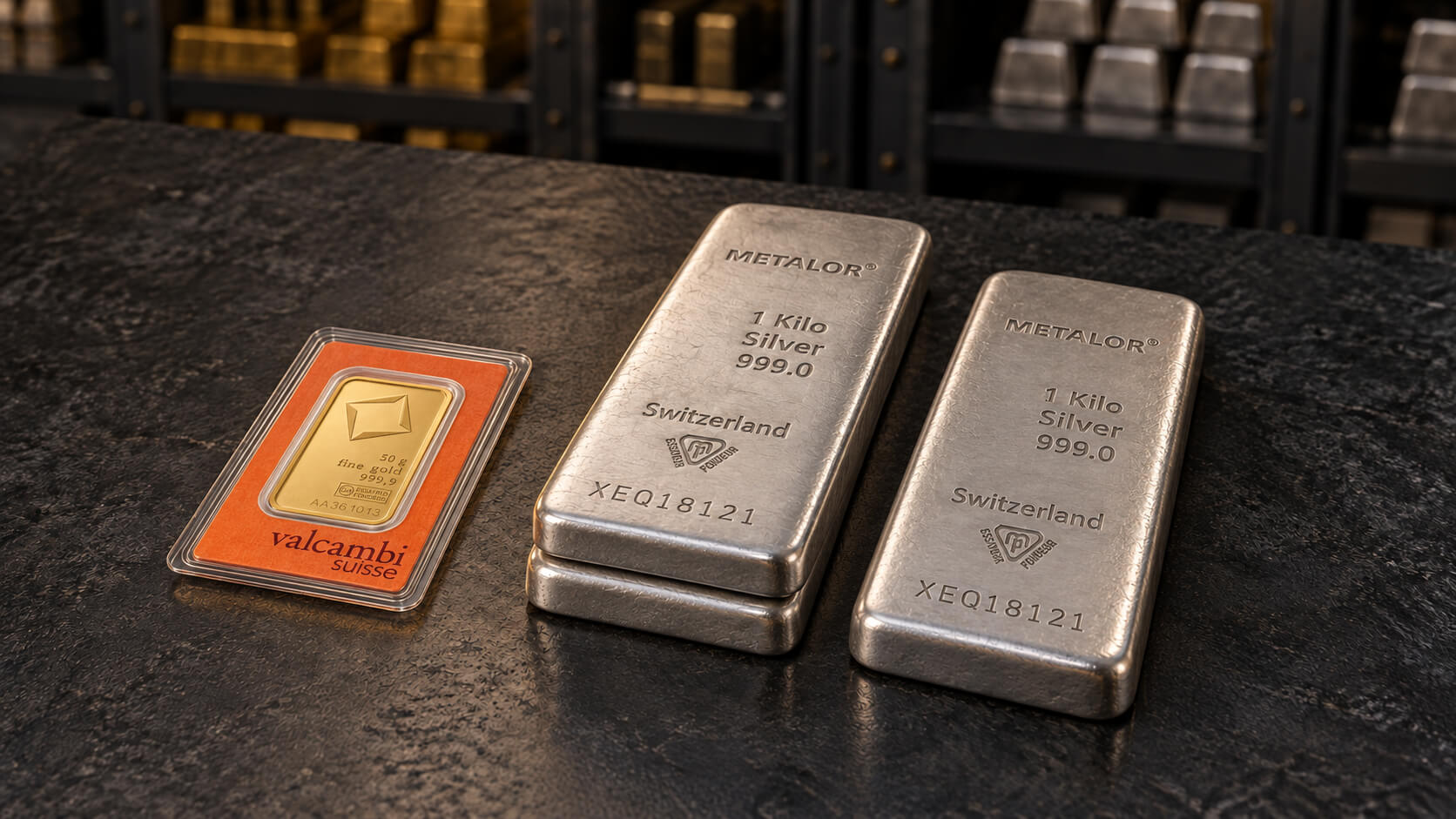
Gold and silver are often discussed together.
Both are precious metals. Both are available as physical bullion. Both can be manufactured into recognized bars, and both have internationally quoted market prices.
Yet owning physical gold and owning physical silver can feel surprisingly different.
The distinction becomes particularly clear when buyers move beyond price charts and begin handling, storing and organizing the actual products.
Weight, physical volume, typical denominations and storage requirements can all change.
Understanding those differences helps buyers evaluate gold and silver as physical assets rather than assuming that one is simply a cheaper version of the other.
Gold Concentrates More Value Into Less Space
One of the most noticeable differences is value density.
Gold generally represents significantly more monetary value per unit of weight than silver.
That means a relatively compact quantity of gold can represent a substantial holding.
To reach a similar monetary amount with silver, considerably more physical metal may be required.
This changes the ownership experience immediately.
The Difference Becomes Physical
Price charts can make gold and silver look similar because both appear as lines moving across a screen.
Physical products reveal the difference.
A 50 gram gold bar is compact.
A one-kilogram silver bar is physically much heavier and larger.
A buyer accumulating silver can therefore reach several kilograms of metal relatively quickly.
Gold holdings of comparable monetary value may occupy considerably less space.
Storage Planning Matters More With Silver
Every physical bullion owner needs to consider secure storage.
Silver adds another dimension: volume and weight.
One silver bar may be simple to store.
Several one-kilogram bars begin to create meaningful physical mass.
As a silver holding grows, owners need to think about:
- Storage dimensions
- Shelf or compartment capacity
- Combined weight
- Ease of handling
- Packaging
- Inventory organization
The storage plan should develop with the holding.
Gold Offers Compact Physical Ownership
Gold’s compactness can be attractive to buyers who want substantial precious-metal value represented by relatively small physical products.
A collection of gold bars can fit within a small secure storage area.
That does not make storage security less important.
It simply means space and structural weight may be less demanding than with a large silver holding.
Silver Can Offer Larger Physical Presence
Some buyers appreciate the tangible scale of silver.
A one-kilogram silver bar feels substantial.
It makes physical ownership very obvious.
That characteristic can appeal to people who enjoy holding a larger quantity of metal rather than concentrating value into a very small object.
This is a preference rather than an investment rule.
Product Denominations Differ
Gold bullion commonly appears across many small and medium denominations.
Buyers may encounter:
- 2.5g
- 5g
- 10g
- 20g
- 50g
- 100g
- 1 troy ounce
- 500g
Silver products often move into larger weights more naturally.
Common physical formats can include hundreds of grams or kilograms.
The denomination structure reflects the very different value density of the two metals.
One Kilogram Means the Same Weight, Not the Same Value
A kilogram is a kilogram regardless of the metal.
One kilogram of gold and one kilogram of silver have identical physical mass.
Their monetary values are dramatically different.
This sounds straightforward, but it illustrates why weight alone cannot be used to compare different precious metals.
The metal itself matters.
Fineness Still Needs to Be Checked
Gold and silver bullion each have stated purity specifications.
Investment gold bars may display 999.9 fineness.
Silver bars may use specifications such as 999.
The buyer should read the exact product details rather than assuming every precious-metal bar has identical purity notation.
Weight tells you how much the product weighs.
Fineness tells you how much of that product is represented by the stated precious metal.
Refinery Recognition Matters for Both
Recognized refiners can produce bullion across more than one precious metal.
Names such as Valcambi and Metalor are associated with products across gold and silver categories.
This means buyers who already understand a refinery through gold products may encounter the same manufacturer when exploring silver.
The metal changes.
The importance of clear manufacturer identity does not.
Price Movements Can Differ
Gold and silver do not necessarily move in identical ways.
Both respond to precious-metal markets, but their demand structures differ.
Silver has significant industrial uses alongside investment demand.
Gold has its own combination of investment, reserve, jewelry and industrial demand.
A buyer should therefore avoid assuming that silver will simply reproduce gold’s market behavior at a lower price.
They are separate markets.
Physical Ownership Makes Market Differences More Concrete
When prices move, the market value of the holding changes.
The physical products themselves remain defined by weight and purity.
A one-kilogram silver bar remains one kilogram.
A 50 gram gold bar remains 50 grams.
This is one reason it can be useful to maintain an inventory based on physical quantities separately from current market valuations.
Smaller Budgets Can Access Different Quantities of Metal
Because silver generally has a lower price per unit of weight than gold, a given budget can purchase a larger physical quantity of silver.
That does not mean the buyer receives more value simply because the object is heavier.
It means the market values the two metals differently.
The decision should be based on the role each metal is intended to play rather than on which purchase looks physically larger.
Do Not Compare Products by Size
A large silver bar can look more impressive beside a tiny gold bar.
Physical size says little about relative monetary value.
Likewise, a very small gold bar may represent a surprisingly significant amount compared with a much larger-looking piece of silver.
Product evaluation should remain specification-led.
Check:
- Metal
- Weight
- Fineness
- Refinery
- Current price
Appearance comes later.
Silver Requires More Handling as Holdings Grow
A larger physical collection usually means more lifting and organization.
Ten one-kilogram silver bars represent ten kilograms of metal before accounting for packaging or storage equipment.
This is not necessarily a problem.
It simply needs to be planned.
Someone expecting to build a substantial silver holding should think about practical handling early.
Gold Can Simplify Transport
Compactness also affects transportation.
Moving a defined monetary amount in gold may involve considerably less weight than moving an equivalent approximate value in silver.
This can matter when bullion needs to be collected, relocated or transferred.
Security considerations remain important regardless of metal.
Packaging Can Increase the Space Difference
Physical bullion is not always stored as bare metal.
Protective packaging adds dimensions.
Several individually packaged products can occupy more space than their raw metal measurements suggest.
This effect is especially noticeable when a holding contains many individual units.
Buyers should therefore consider the complete physical product rather than metal weight alone.
Gold Coins Introduce Another Format
Gold ownership can also include recognized coins.
Coins create a different physical experience from bars and may have historical, minting or design characteristics alongside their metal content.
Silver also exists in coin form, although a buyer comparing gold and silver should evaluate the specific product rather than assuming every coin serves the same purpose.
A Mixed-Metal Holding Needs Separate Records
If someone owns both gold and silver, the inventory should keep them distinct.
Useful totals include:
- Total gold weight
- Total silver weight
- Number of gold bars
- Number of silver bars
- Number of coins
- Refinery distribution
Avoid adding all precious-metal weights together into one figure.
Ten kilograms of silver plus 100 grams of gold does not become a useful “10.1 kilogram precious-metal total” for decision-making.
Storage Can Be Zoned by Metal
A mixed holding can be easier to manage when gold and silver occupy separate storage zones.
This makes physical verification simpler.
Gold products can be grouped by denomination.
Silver products can be grouped by weight and refinery.
Coins can remain in their own protective formats.
Organization reduces unnecessary handling.
Think About How Much Physical Metal You Want
Some buyers begin with a financial allocation.
Another useful question is physical:
How much metal am I comfortable storing?
This question matters particularly with silver.
A buyer planning substantial accumulation should consider what several kilograms will mean in practice.
The answer may influence the balance between gold and silver.
Selling Physical Silver Also Involves More Weight
The storage difference does not disappear when bullion is sold.
A large silver holding may need to be physically transported for evaluation or sale.
Gold can represent a comparable monetary amount in a much lighter package.
Future handling is therefore part of the ownership decision.
Neither Metal Needs to Replace the Other
Gold and silver can serve different preferences within physical precious-metal ownership.
A buyer may choose only gold.
Another may prefer silver.
Another may hold both.
The relevant decision depends on:
- Budget
- Storage
- Desired physical quantity
- Market view
- Product availability
- Long-term objectives
The metals do not need to be treated as direct substitutes.
Start With the Product, Not the Metal’s Reputation
Gold is often associated with wealth preservation.
Silver is often described as accessible or industrial.
Those descriptions are broad.
A physical buyer still needs to evaluate the actual product.
What weight is it?
What is the fineness?
Who refined it?
How much space will it require?
What is the current price?
Is it appropriate for the intended holding?
Practical questions prevent broad narratives from replacing product evaluation.
Physical Ownership Makes the Difference Clear
The most useful way to understand gold and silver is to remember that they are not just market symbols.
They are physical materials.
Gold concentrates substantial value into compact products.
Silver can provide significantly more physical metal for a given budget but requires more storage and handling as the holding grows.
Both can be purchased in recognized bullion formats.
Both need secure storage.
Both need clear documentation.
The right choice depends on what the buyer wants from physical ownership.
Understanding the practical differences makes that choice easier.
Frequently Asked Questions
Is silver physically harder to store than gold?
A substantial silver holding can require considerably more space and structural capacity because silver generally represents less monetary value per unit of weight than gold.
Are gold and silver measured using the same units?
Both can use grams, kilograms and troy ounces, although the most common retail denominations can differ between the two metals.
Can I hold both gold and silver bullion?
Yes. Buyers can build mixed-metal holdings, although each metal should be tracked separately for inventory and evaluation.
Does a larger silver bar mean it is worth more than a smaller gold bar?
Not necessarily. Physical dimensions do not determine monetary value. The metal, weight, purity and current market price all matter.
Should gold and silver be stored separately?
They do not necessarily require completely separate facilities, but organizing them into separate categories can make inventory and physical verification easier.
Explore Physical Gold and Silver
Compare gold bars, gold coins, and silver bars by metal, weight, refinery, and physical format before choosing what fits your plan.
Related Articles
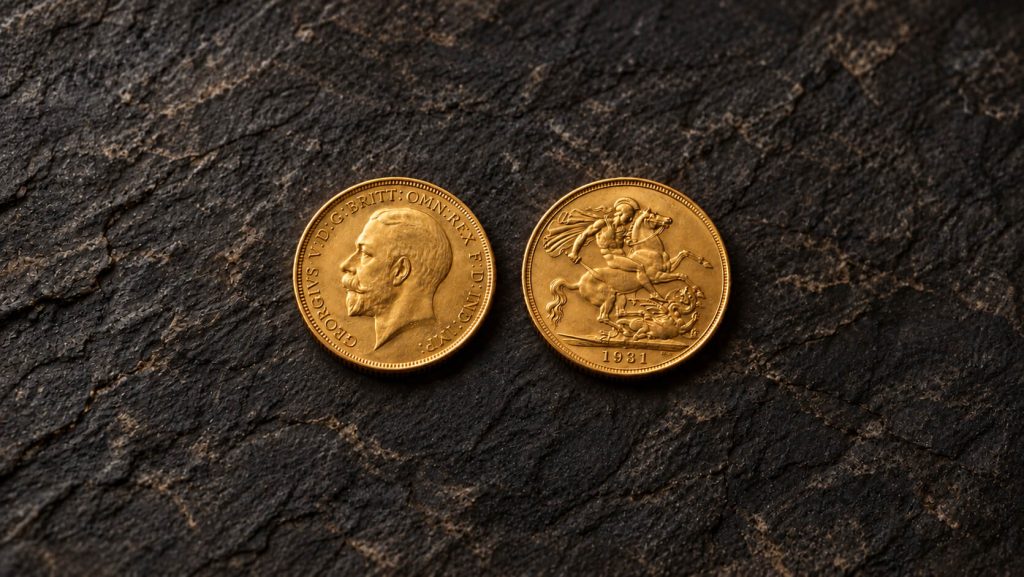
The George V Gold Sovereign: Beyond Its Gold Content
The British gold sovereign is one of the most recognizable historical gold coins in the world....
Read More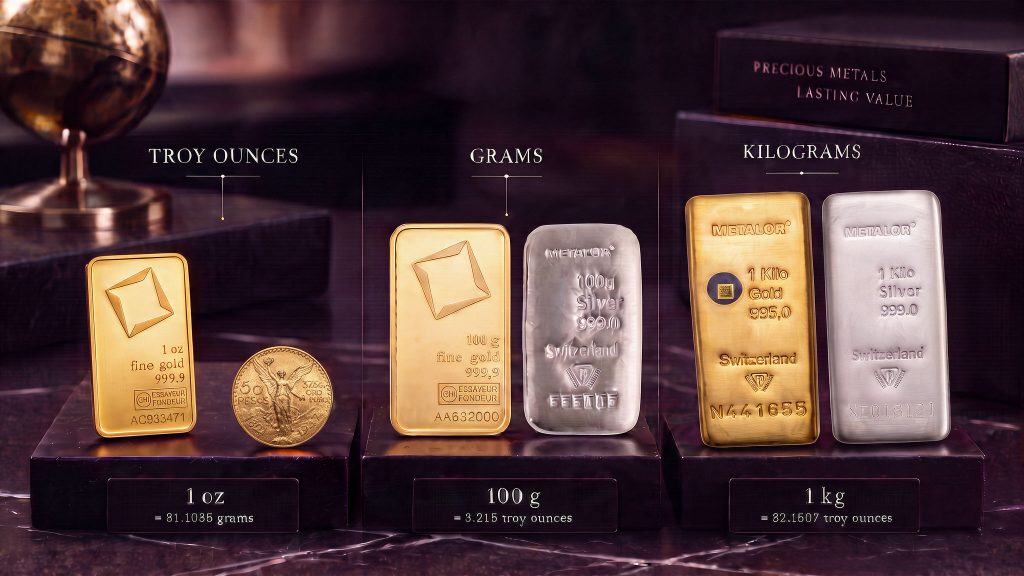
Troy Ounces, Grams, and Kilograms in Bullion
Physical bullion is sold in several weight formats. A buyer might see a five-gram gold bar,...
Read More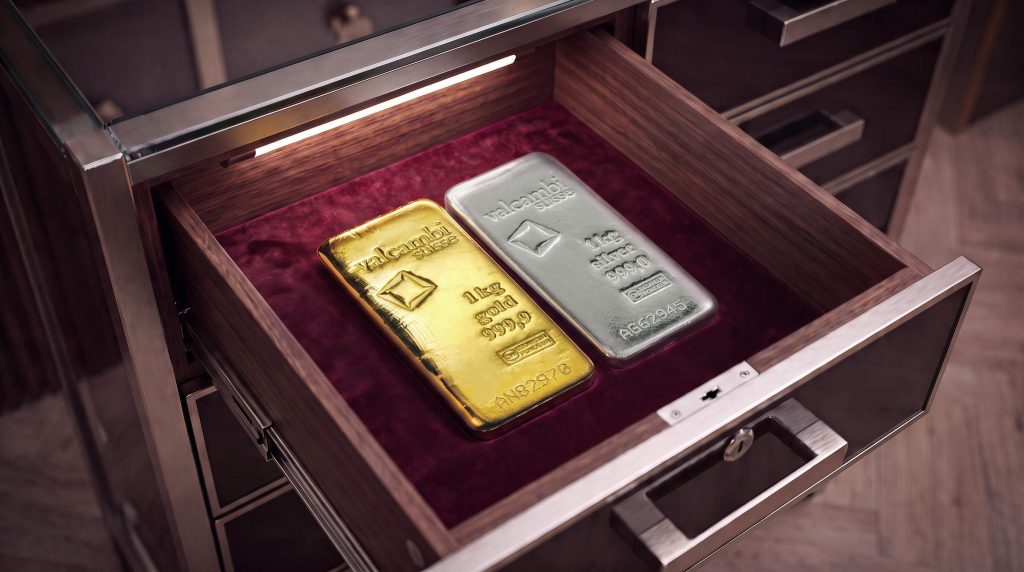
Storage Planning Should Start Before Buying Bullion
Buying physical bullion does not end when the product is selected. Once a buyer chooses gold...
Read More