
No products in the cart.
The George V Gold Sovereign: Beyond Its Gold Content

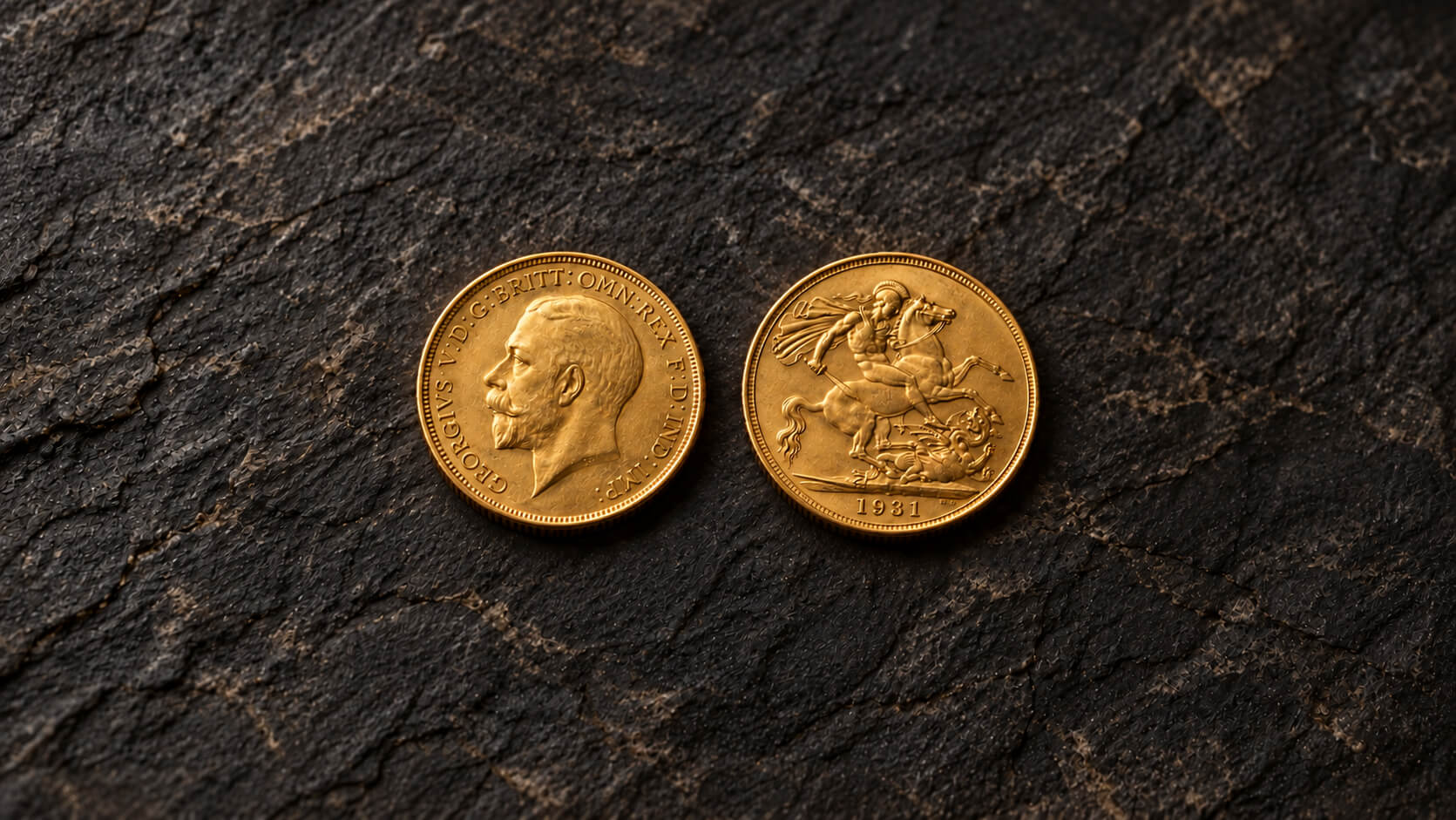
The British gold sovereign is one of the most recognizable historical gold coins in the world. Its appeal comes from a combination of precious metal content, established specifications and a design tradition that has continued for generations.
Among the many sovereign issues, coins featuring King George V remain particularly interesting because they connect physical gold ownership with a distinct period of British monetary history.
For buyers considering a George V gold sovereign, understanding the coin involves more than identifying its portrait or checking its current price.
The sovereign has a defined weight, a specific gold purity and a standardized amount of fine gold. These characteristics distinguish it from modern investment gold bars, which are commonly manufactured to much higher fineness levels.
Understanding these differences helps buyers evaluate the coin according to what it actually contains.
The History Behind the Modern Gold Sovereign
The modern British sovereign was introduced in 1817 as part of Britain’s monetary reforms.
It became an important gold coin within the country’s monetary system and eventually circulated internationally through trade and commerce.
Unlike a decorative commemorative object, the sovereign originally served a monetary function.
Its specifications were designed to support consistency across large numbers of coins.
That standardization contributed to the sovereign’s recognition beyond Britain.
A Coin With an Established Identity
The sovereign became associated with several defining characteristics:
- A standardized gold content
- A recognizable circular format
- A portrait of the reigning monarch
- An established reverse design
- A consistent denomination
- A long history of minting
These features helped establish the sovereign as a recognizable gold coin.
Although modern buyers may acquire sovereigns for bullion ownership or collecting, the coin’s historical monetary role remains central to its identity.
The George V Period
King George V reigned from 1910 until 1936.
Sovereigns bearing his portrait were produced during a period that included major political and economic changes, particularly the First World War and its aftermath.
Coins from this reign therefore belong to a specific historical context.
The portrait on the obverse identifies the monarch, while the date provides information about the particular issue.
For someone purchasing a George V sovereign, these details help distinguish the coin from sovereigns featuring other British monarchs.
The Obverse Design
The obverse displays a portrait of King George V.
The portrait was designed by Bertram Mackennal, an Australian sculptor whose work appeared on British coinage during the reign.
The surrounding inscription identifies the monarch through the traditional royal titles.
The portrait is not simply decorative. It establishes the historical identity of the coin.
The Reverse Design
Many George V sovereigns feature the celebrated Saint George and the Dragon design by Benedetto Pistrucci.
The composition depicts Saint George on horseback confronting the dragon.
Its dramatic movement and detailed relief have made it one of the most recognizable designs associated with British gold coinage.
The design also creates a clear visual distinction between the sovereign and a modern gold bar.
Why the Sovereign Contains 22-Carat Gold
One of the most important characteristics of a traditional sovereign is its purity.
A full gold sovereign is struck in 22-carat gold.
This corresponds to approximately 91.67% gold content.
The remaining proportion consists of alloying metal, traditionally copper or other metals depending on the issue.
This composition differs from modern investment bars that commonly display 999.9 fineness.
A 999.9 gold bar contains approximately 99.99% gold.
A sovereign contains a lower proportion of gold relative to its total weight, but that does not mean the coin is incorrectly manufactured.
Its composition follows an established historical standard.
The Purpose of the Alloy
Pure gold is relatively soft.
For coins intended to circulate and withstand repeated handling, adding an alloying metal can increase hardness.
This was particularly important when gold coins were used in everyday monetary transactions.
The sovereign’s 22-carat composition reflects that practical requirement.
Today, the same composition remains an identifying characteristic of traditional sovereign coinage.
Gross Weight Versus Fine Gold Weight
A common mistake when comparing gold coins with bars is confusing total product weight with pure gold content.
A full sovereign has a standard gross weight of approximately 7.98 grams.
However, not all of that weight is pure gold.
Because the coin is 22 carats, its fine gold content is approximately 7.3224 grams.
This distinction matters when comparing the sovereign with a high-purity gold bar.
Consider two products:
- A full sovereign weighing approximately 7.98 grams at 22-carat purity
- A 10 gram investment gold bar at 999.9 fineness
The sovereign’s gross weight includes its alloy.
The bar’s stated weight is almost entirely fine gold.
Both products contain genuine gold, but their specifications are different.
Understanding the Sovereign’s Gold Content in Troy Ounces
Precious metals are frequently measured in troy ounces.
One troy ounce equals approximately 31.1035 grams.
A full sovereign contains approximately 0.2354 troy ounces of fine gold.
This figure is useful when comparing sovereigns with products priced according to international gold market references.
For example, a buyer who follows the international gold price per troy ounce can understand the approximate underlying gold quantity represented by a sovereign.
However, the retail price of a sovereign should not be assumed to equal its fine gold content multiplied by the spot price.
The finished coin may carry a premium associated with its format, recognition, condition and market demand.
Why Sovereigns Are Different From Modern Gold Bars
Modern investment gold bars are generally designed around direct precious-metal ownership.
They typically communicate information such as:
- Refinery
- Weight
- Fineness
- Metal type
- Product identification
A sovereign has a different identity.
Its specifications are connected to a historical coinage system.
It also carries design elements, dates and minting characteristics that may matter to collectors.
The distinction is not that one product contains real gold and the other does not.
Both can represent physical gold ownership.
The difference lies in how the gold is presented, identified and valued within the market.
The Role of Coin Condition
Physical condition can matter when evaluating historical coins.
A sovereign may show evidence of circulation, including surface wear or small marks.
Another example may retain more of its original detail.
Condition can influence collector interest, particularly for specific dates or mint varieties.
However, buyers should distinguish between bullion-oriented sovereigns and coins purchased primarily for numismatic value.
A common-date sovereign purchased mainly for its gold content is not necessarily priced or evaluated in the same way as a rare collectible example.
Avoid Unnecessary Cleaning
Cleaning a historical coin may seem like a way to improve its appearance.
In practice, aggressive polishing can damage the original surface.
This can reduce collector appeal and make professional evaluation more difficult.
Owners should avoid attempting to make an older coin look newly minted.
Preserving its existing condition is generally more appropriate.
Dates and Mint Marks
George V sovereigns were produced across different years and at different minting locations.
Some examples may carry mint marks that identify where they were struck.
These details can influence the historical identity of a particular coin.
They may also affect collectability.
However, a buyer should not assume that every date or mint mark automatically creates a significant premium.
Rarity, condition, demand and authenticity all matter.
For ordinary bullion purchases, the underlying fine gold content remains an important reference point.
Comparing a Sovereign With a Small Gold Bar
Someone considering physical gold may compare a sovereign with a smaller gold bar.
For example, RM Bullion offers the 2.5 Gram Valcambi Swiss Gold Bar, a compact investment product with stated 999.9 fineness.
The two products provide different ownership experiences.
The Valcambi bar emphasizes refined gold purity and a modern bullion format.
The sovereign combines a defined amount of gold with historical coinage characteristics.
Neither format is universally better.
The relevant choice depends on whether the buyer prioritizes the modern bar format, historical recognition or a combination of both.
Why Recognition Matters
Recognized bullion products can be easier to identify because their specifications are established.
The sovereign benefits from a long history and a consistent physical format.
Its familiar diameter, design and weight provide reference points during evaluation.
However, recognition alone does not establish authenticity.
Counterfeit coins exist.
A buyer should therefore purchase through a reliable source and avoid assuming that a convincing appearance is sufficient proof.
Professional evaluation may consider weight, dimensions, metal composition and other identifying characteristics.
Sovereigns as Long-Term Physical Holdings
A sovereign is a compact physical object.
It can be stored, transferred or included within a broader collection of precious metals.
Some buyers appreciate its connection to history.
Others value the recognizable quantity of gold it represents.
A collection might contain modern bars alongside historical gold coins.
For example, a buyer could hold a 20 Gram Valcambi Swiss Gold Bar as part of a modern bullion allocation while maintaining sovereigns as a separate coin category.
The important point is to record each product according to its actual fine gold content rather than combining gross weights without adjusting for purity.
Understanding the Difference Between Metal Value and Collector Value
The market value of a sovereign can reflect more than one component.
Its fine gold content provides an underlying precious-metal reference.
The finished coin may also carry a premium.
For some examples, that premium is primarily associated with bullion distribution and demand.
For others, rarity, condition or historical characteristics may influence pricing more significantly.
Buyers should understand which type of product they are evaluating.
A historical date does not automatically make a coin rare.
Likewise, a common bullion sovereign is not necessarily valued solely at its melt value.
A Different Form of Gold Ownership
The George V sovereign occupies an interesting position between investment bullion and historical coinage.
It contains a standardized quantity of gold.
It carries a recognizable design.
It belongs to a defined historical period.
And it differs from modern high-purity bars through its 22-carat composition.
For buyers exploring physical gold, understanding those characteristics makes the sovereign easier to evaluate.
The key is to recognize exactly what the product represents.
Its gross weight is not its fine gold weight.
Its age does not automatically establish rarity.
Its historical identity does not replace the need for authenticity.
When those distinctions are clear, the George V sovereign becomes a meaningful option within the broader world of physical gold.
Frequently Asked Questions
How much does a full George V gold sovereign weigh?
A standard full sovereign weighs approximately 7.98 grams in total.
Is a George V sovereign made from pure gold?
No. Traditional George V sovereigns are struck in 22-carat gold, corresponding to approximately 91.67% purity.
How much pure gold is inside a full sovereign?
A full sovereign contains approximately 7.3224 grams, or 0.2354 troy ounces, of fine gold.
Does every George V sovereign have the same collector value?
No. Date, mint mark, condition, rarity and market demand can influence collector value.
Should an old sovereign be polished before selling?
Unnecessary cleaning or polishing should generally be avoided because it can damage the coin’s original surface.
Explore Gold Beyond the Bar
Discover recognized gold coins and investment-grade gold bars while comparing their purity, physical characteristics, and long-term ownership appeal.
Related Articles
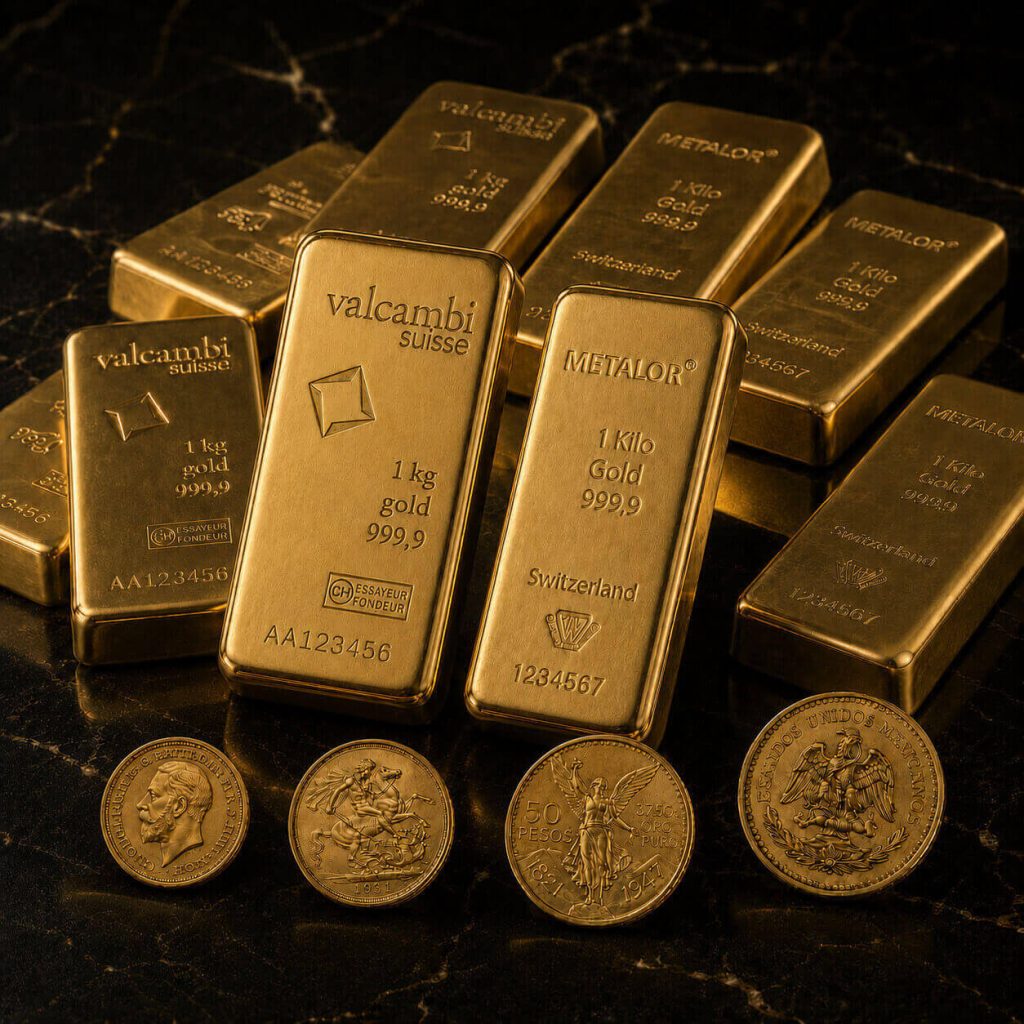
Gold Bars and Gold Coins Serve Different Buying Goals
Gold bars and gold coins are two of the most recognized ways to own physical gold....
Read More
Why Clear Product Availability Matters When Buying Bullion Online
Buying bullion online should feel clear from the first click. When someone is looking for gold...
Read More
A Practical Approach to Mixing Bullion Denominations
Buying physical gold involves more than deciding how much money to allocate. There is another practical...
Read More