No products in the cart.
From Refined Silver to Finished Bullion Bars

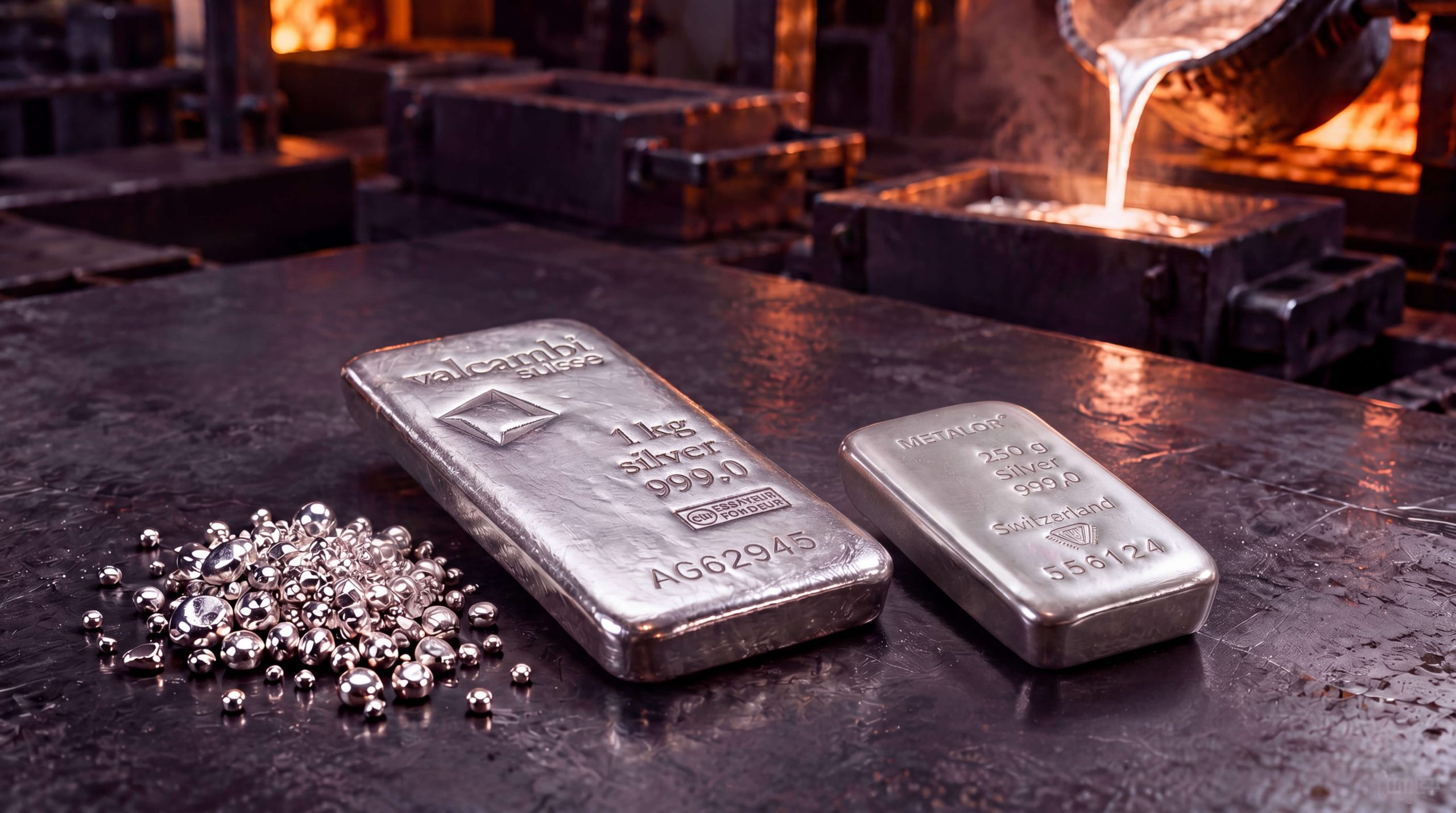
A finished silver bullion bar appears simple.
It has a defined weight, a recognizable shape and markings that identify its metal content and producer.
Yet the manufacturing process behind that finished product involves several important stages.
Silver must be sourced, refined, tested, formed and prepared for distribution before it becomes an investment-grade bar.
Understanding this process helps buyers appreciate why physical silver is more than an unprocessed quantity of metal.
A finished bullion bar is a manufactured product designed to provide a measurable amount of precious metal in a recognizable physical format.
Where Bullion Silver Comes From
Silver enters the refining industry through several sources.
Some originates from mining operations where silver is the principal metal being extracted.
Other quantities are recovered as by-products of mining for metals such as copper, lead and zinc.
Recycled silver also plays an important role.
Industrial materials, jewelry, electronic components and previously manufactured silver products can all become sources of recoverable metal.
These materials do not arrive at a refinery in identical condition.
They may contain different concentrations of silver alongside other substances.
The refinery’s responsibility is to separate and purify the valuable metal.
Why Refining Is Necessary
Silver-bearing material is not automatically suitable for manufacturing investment bullion.
Raw material can contain impurities or other metals.
The refining process is intended to produce silver with a controlled purity.
This matters because investment bullion is sold according to defined specifications.
A buyer purchasing a silver bar should not need to estimate its purity from appearance.
The finished product should communicate a measurable fineness.
The Meaning of 999 Silver
One common investment silver specification is 999 fineness.
This means the product contains 999 parts silver per thousand parts of material.
In percentage terms, that corresponds to 99.9% silver.
RM Bullion’s 250 Gram Metalor Swiss Silver Bar is an example of a product listed with 999 fineness.
The specification provides a clear reference for buyers.
It also distinguishes investment silver from alloys used for other purposes.
For example, sterling silver typically contains 92.5% silver.
Both are genuine silver materials, but they have different compositions and applications.
Purity Testing Is Part of the Manufacturing Process
A professional refinery must verify the composition of its material.
Testing can take place at different stages of production.
The methods used depend on the refinery, the material and the level of precision required.
The purpose is to establish whether the silver meets the intended specification.
Why Visual Appearance Is Not Enough
Silver has a recognizable metallic appearance.
However, color and shine cannot establish exact purity.
Different alloys can appear similar.
Surface treatments can also affect appearance.
This is why professional refining relies on analytical testing rather than visual judgment alone.
For buyers, the stated fineness is more meaningful than whether a bar looks particularly bright.
From Refined Metal to a Physical Bar
Once silver reaches the required specification, it can be formed into investment products.
Different manufacturing techniques produce different appearances.
Two common approaches are casting and minting.
Both can produce genuine investment bullion.
The distinction relates primarily to manufacturing method and physical finish.
How Cast Silver Bars Are Produced
Casting involves pouring molten metal into a prepared mold.
As the metal cools, it solidifies into the intended shape.
The resulting bar may retain natural surface characteristics associated with the casting process.
Depending on the manufacturer, these can include subtle texture, rounded edges or variations in surface appearance.
A cast bar does not need to look perfectly polished to contain correctly refined silver.
Its physical character reflects the manufacturing method.
Why Casting Is Useful
Casting can be practical for producing larger bars.
The process allows significant quantities of metal to be formed into individual units.
After cooling, the bars can undergo further inspection, weighing and identification.
The final product must still meet the manufacturer’s specifications.
How Minted Silver Bars Differ
Minted bars are generally produced through a more controlled shaping process.
Silver may first be prepared into sheets or blanks of defined dimensions.
These blanks can then be struck or pressed using specialized equipment.
The process creates a more uniform finish.
Minted products often display:
- Defined edges
- Consistent dimensions
- Refined surface texture
- Precise markings
- Controlled presentation
However, buyers should not assume that a more polished appearance means higher purity.
A cast bar and a minted bar can contain silver of the same stated fineness.
The Importance of Accurate Weight
Weight is fundamental to bullion manufacturing.
A bar described as containing one kilogram of silver must meet the relevant product specifications.
The manufacturer needs to control the amount of metal used and verify the finished product.
Weight checks are therefore an important part of production.
For smaller bars, relatively small deviations can represent a meaningful proportion of the product.
For larger bars, precise weight remains essential because the quantity of metal is substantial.
Why Silver Bars Have Different Dimensions
Two silver bars with the same weight do not necessarily have identical dimensions.
Manufacturers may use different molds, shapes or thicknesses.
One bar may be wider and thinner.
Another may be narrower and thicker.
Both can represent the same nominal silver weight.
This is why dimensions should be read alongside weight and fineness.
Photographs alone cannot provide an accurate comparison.
A bar that appears larger in an image may simply have been photographed from a different angle.
Refinery Markings Identify the Finished Product
After manufacturing, bullion bars normally receive identifying information.
Depending on the product, this may include:
- Refinery name or logo
- Metal type
- Nominal weight
- Fineness
- Serial identification where applicable
These markings connect the physical object to its stated specifications.
They also make the product easier to recognize.
However, markings should not be treated as independent proof of authenticity.
Professional-looking stamps can be imitated.
Reliable sourcing and proper product verification remain important.
The Role of Recognized Refineries
Established refiners operate within an industry where consistency and product recognition matter.
RM Bullion offers physical silver products from recognized Swiss refiners, including Valcambi and Metalor.
Both names are associated with precious-metal refining and finished bullion products.
For buyers, refinery recognition can make product identification more straightforward.
It provides a known manufacturer behind the specifications.
This is especially useful when comparing silver bars that may otherwise appear visually similar.
Surface Finish Is Not the Same as Silver Quality
A silver bar may have a smooth reflective finish.
Another may display a more traditional cast surface.
Neither appearance alone determines the quality of the underlying silver.
The important characteristics remain:
- Correct metal
- Defined weight
- Stated fineness
- Recognized manufacturer
- Appropriate product identification
Surface presentation can influence personal preference, but it should not replace technical specifications.
Packaging and Final Preparation
Once a bar has passed the manufacturer’s quality checks, it may be packaged for distribution.
Packaging depends on the product format.
Some bars may be individually protected.
Others may be supplied in simpler protective materials.
The purpose is to reduce unnecessary surface contact and support safe handling.
Packaging can also help preserve the bar’s presentation during transportation and storage.
However, packaging is separate from the precious metal itself.
The underlying silver remains the asset.
Why Manufacturing Matters to the Buyer
A bullion buyer does not need to become a refining specialist.
However, understanding the basic manufacturing process can make product comparisons more meaningful.
It explains why a finished bar has characteristics beyond its raw metal content.
The bar has been:
- Refined to a specified purity
- Prepared for manufacturing
- Formed into a defined physical product
- Checked for weight and quality
- Marked for identification
- Prepared for distribution
Each stage contributes to the finished product.
Understanding Product Premiums
The international silver price provides a reference for the underlying metal.
A finished silver bar also involves manufacturing and distribution.
These activities can contribute to the premium associated with a physical bullion product.
A buyer should therefore distinguish between the market value of silver and the retail price of a manufactured bar.
Different products may have different premium structures because manufacturing methods, weight, availability and distribution costs vary.
The Difference Between 250 Grams and One Kilogram
Silver bars are available in several denominations.
A 250 gram bar contains one-quarter of the nominal silver weight of a one-kilogram bar.
The manufacturing principles may be similar, but the finished products serve different allocation sizes.
A smaller bar may be easier to acquire as an individual purchase.
A larger bar concentrates more silver into one physical unit.
The choice depends on the buyer’s intended quantity, storage arrangements and preference for separate pieces.
Manufacturing Does Not Eliminate Market Risk
A professionally refined bar provides a defined physical product.
It does not guarantee a future market price.
Silver remains a globally traded precious metal.
Its value can rise or fall based on market conditions.
Manufacturing quality and market performance are separate considerations.
A buyer can be confident about the product’s stated specifications without assuming that its price will always increase.
Physical Silver Begins With Measurable Standards
The finished appearance of a silver bar may be simple, but the process behind it is highly structured.
Raw material is refined.
Purity is established.
Metal is formed into a product.
Weight is checked.
Identification is applied.
The result is a recognizable physical unit of silver.
For buyers, understanding that process reinforces the importance of selecting products with clear specifications and reliable manufacturing origins.
The most meaningful characteristics of a silver bar are not decorative.
They are measurable.
Weight, fineness, refinery identity and product format explain what the buyer owns.
Those details are what connect the finished bar to the precious metal it represents.
Frequently Asked Questions
How are investment silver bars manufactured?
Silver is refined to the required purity, formed into bars through processes such as casting or minting, and checked before distribution.
What does 999 mean on a silver bar?
It indicates a fineness of 999 parts silver per thousand, equivalent to 99.9% purity.
Are cast silver bars less pure than minted bars?
Not necessarily. Casting and minting describe manufacturing methods rather than purity levels.
Why do silver bars from different refineries look different?
Manufacturers use different molds, dimensions, finishes and marking systems, so bars with similar weights can have different appearances.
Does a polished silver bar contain better silver?
Surface finish does not establish purity. Buyers should rely on the product’s stated specifications and reliable sourcing.
Discover Refined Physical Silver
Explore investment-grade silver bars from recognized Swiss refineries and compare their weights, purity, and physical formats.
Related Articles
Storage Planning Should Start Before Buying Bullion
Buying physical bullion does not end when the product is selected. Once a buyer chooses gold...
Read More
Why Refinery Recognition Matters in Physical Bullion
A gold bar is defined by more than its color. A silver bar is defined by...
Read More
A Practical Approach to Mixing Bullion Denominations
Buying physical gold involves more than deciding how much money to allocate. There is another practical...
Read More